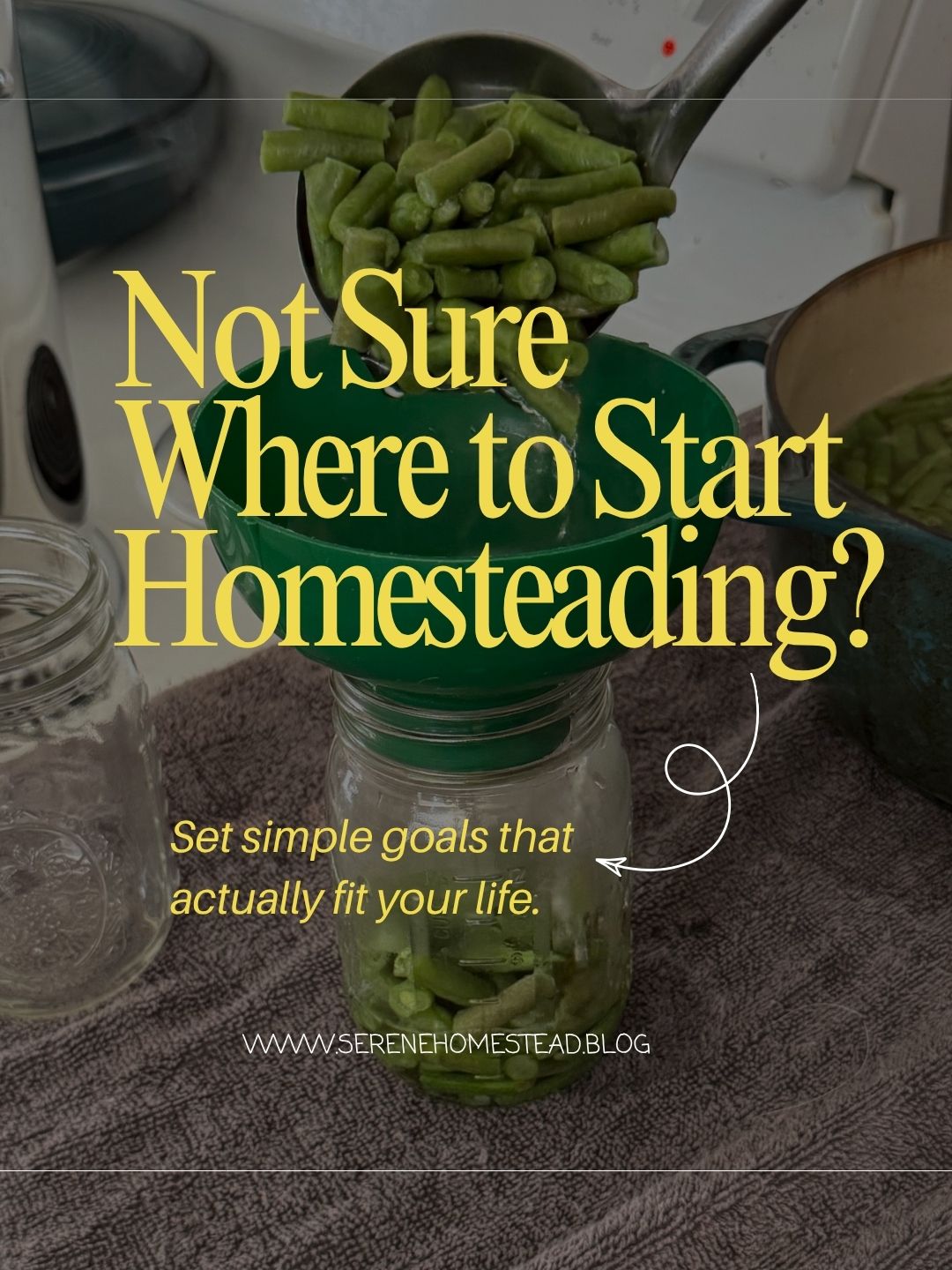


How to Set Homesteading Goals
Homesteading has become a flashy word on social media and in some ways, that has given a false illusion to what it is. At its core, homesteading is a relatively simple concept and can be adjusted based on everyone’s individual goals. Examples of common homesteading goals include:
- Growing your own food
- Learning to preserve food
- Raising animals
- Becoming less dependent on constantly buying everything you need
Once you begin coming up with homesteading goals, it’s easy to find yourself with a long list of random ideas and skills that can seem overwhelming. This is why it’s important to set practical homesteading goals that not only fulfill your needs but also incorporate other important variables such as your budget, space, and available time.
Let’s explore how to set practical goals for you to build your dream homestead.

Start with Your “Why”
Before deciding what you want to accomplish, think about why you want to homestead. Some common reasons why include wanting to:
- Save money
- Know where more of your food comes from
- Be better prepared
- Develop more practical skills
- Start doing more things for yourself
Figuring out your why will help you decide what you should prioritize and then be able to come up with ways to make your goals a reality.
Look at Your Current Situation
It’s easy to create goals based on the homestead you wish you had but it’s important to also focus on what you already have available. Ask yourself the following questions:
- How much space do you have?
- Do you rent or own?
- What does your budget look like?
- How much time can you realistically dedicate?
- What resources are available to you?
- Are there restrictions on gardening or animals where you live?
The answers to these questions might make you feel like homesteading isn’t an option, but instead of perceiving them negatively, think of them as a starting point. Good goals work with your current circumstances rather than requiring you to completely change them first.
Choose One or Two Priorities
Once you have a list of homesteading goals, it’s tempting to try to do them all at once. Do not fall into this mindset as this approach is very overwhelming and tends to cause you to spread your resources thin, making it difficult for anything to be accomplished.
Choose one or two areas to focus on first. For example:
- Food: Learn one food preservation method
- Gardening: Grow three foods successfully
- Preparedness: Build a practical pantry
- Cooking: Learn five meals made primarily from basic ingredients
- Animals: Research whether raising quail or another animal is realistic for your housing situation
- Skills: Learn one practical household skill
Once you’ve made progress in one area, you can add another. It will take time but building a solid foundation before adding more is a more effective approach. Over time, your small steps will add up.
Turn Big Goals Into Smaller Steps
“Learn to can” sounds simple until you actually think about everything involved. You need to understand the difference between water-bath and pressure canning, learn safe procedures, gather equipment, choose appropriate recipes, and practice. Realizing this can make a single broad goal overwhelming.
My advice is to break large goals down into smaller steps that are easier to accomplish. If the goal is to “learn to can,” break it down into mini goals such as:
- Learn the basics of water-bath canning
- Learn which foods are appropriate for water-bath canning
- Gather basic equipment
- Choose one beginner-friendly recipe
- Practice
- Review what you learned
- Decide if you’re ready to try something else or if more practice with water-bath canning is needed
Setting mini goals helps remove the pressure to take large steps at once and allows you to focus on gradually building your knowledge and skills over time.

Make Your Goal Fit Your Life
Homesteading goals shouldn’t make you resent homesteading. Don’t set goals without factoring in your available time, space, and financial resources. Your goal should challenge you enough to create progress without making success unrealistic or stressful.
Give Yourself a Time Frame
A goal without a time frame can easily become something you plan to do “someday.” Once you set a goal, give yourself a time frame to have it completed by. You can choose to have monthly, seasonal, or yearly goals based on what the goal is and your ability to complete it. Setting a time frame helps give you a reason to move forward from the thinking stage into the doing stage.
Track What You Learn
One of the most valuable things you can do is to keep notes on your progress. Keep notes on things such as:
- What worked
- What didn’t work
- Things you learned
- Things you should try again
- What was a good use of time
- Things that can be skipped in the future
This will help you to be able to clearly see all that you have learned and accomplished while also giving you the knowledge of what works for your household and what you can avoid investing time on in the future.
Let Your Goals Change
Your first homesteading goals don’t have to determine the rest of your life. You may discover things you love and other things that don’t work for you. Don’t feel obligated to stay on a specific goal if it no longer suits you. Homesteading is all about adapting and making things work for you, so allow your goals to change as your knowledge and experience grows.
Celebrate Progress that Looks Small
Not every accomplishment is going to look impressive on social media, but every bit of knowledge gained and skills learned is progress and should be celebrated. Every time you learn something new and successfully take a step toward your goal, take a moment to recognize your accomplishment. Taking the time to celebrate the little steps will help you build your confidence and desire to continue learning more.
Your Homesteading Goals Don’t Need to Be Perfect
The purpose of setting goals isn’t to create a perfect homestead. It’s about figuring out what you want, giving yourself a direction to work towards, and finding ways to make your goals a reality. Work with the space, time, budget, and resources that you have before you take your first step. Continue to take steps and over time, you’ll watch your goals become a reality.
For more practical ideas and beginner-friendly guidance, explore the Beginner Homesteading Library. When you’re ready to take those ideas further, The Anywhere Homestead brings together practical homesteading skills and the mindset behind building self-reliance wherever you live.

Hi, I’m Stephanie!
I homestead alongside my husband, and together we’re learning this life one skill at a time. We’re first-generation homesteaders who started small and learned that homesteading really can happen anywhere.
Here at Serene Homestead, I share the things we’ve learned along the way, from growing and preserving food to raising animals and building practical skills for a more self-reliant life.
I’m happy you’re here!
Read More:


Free Resources:

Start Building a Stocked Pantry
Learn how to build a practical pantry one purchase at a time with this printable guide. Perfect for beginners who want to be more prepared without feeling overwhelmed.

Which Preservation Method Is Right for You?
Not sure where to begin? Compare the most common food preservation methods and discover which one best fits your goals, budget, and lifestyle.
© 2026 Serene Homestead. All rights reserved.